From the clubhouse
10 Best Padel Rackets for Beginners in the UK (2026)
 Jamie Holt27 February 2026 · Updated 29 September 2026
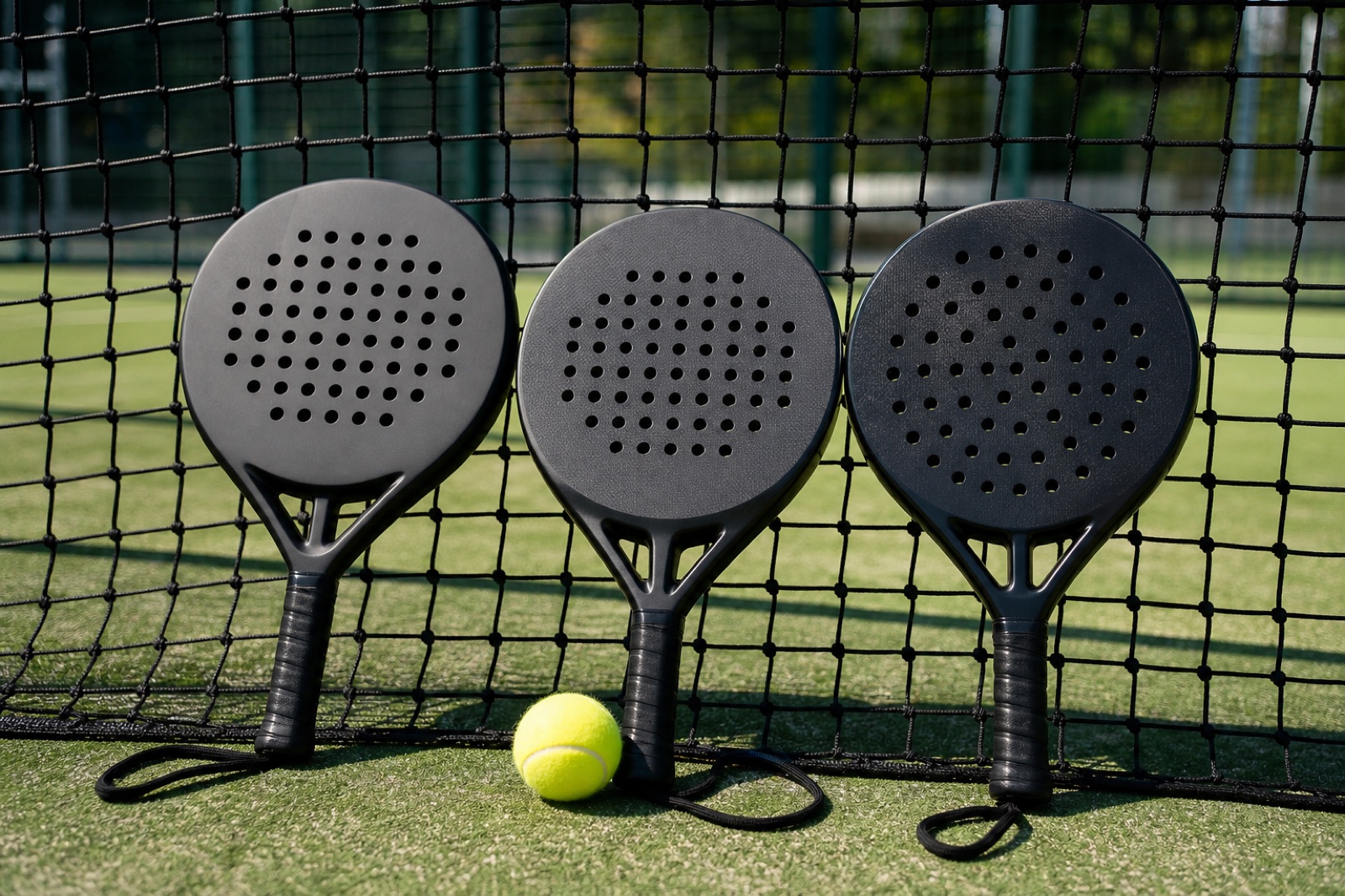
You don't need a £250 racket to learn padel. You need something light, forgiving and comfortable for your first twenty sessions, and ideally a few hires before you commit.
Below are the ten beginner rackets I'd point a friend towards in 2026. After the list there's a guide to weight, shape and balance, so you can judge any racket you find in a shop.
Quick picks
- Best overall: HEAD Evo Speed: light, oversized and forgiving. The easiest recommendation on this list.
- Best for control: Dunlop Megamax: a round head and medium balance at a very fair price.
- Best budget: Dunlop Lumina: a graphite frame for around £45.
- Best lightweight: HEAD Gravity Elite: 340g and round, for smaller players or anyone with a dodgy elbow.
- Best if you'll play weekly: Babolat Counter Origin: a step up in build quality that you won't outgrow in a month.
Beginner rackets compared
| Racket | Shape | Weight | Best for | Typical price |
|---|---|---|---|---|
| HEAD Evo Speed | Oversized teardrop | ~350g | Most beginners | £55–£65 |
| Dunlop Megamax | Round | 360g | Control | £45–£55 |
| Wilson Optix V1 | Round | 355g | Soft feel | £55–£65 |
| Dunlop Lumina | Hybrid | 365g | Tight budgets | £40–£50 |
| HEAD Gravity Elite | Round | 340g | Light players | £65–£75 |
| Babolat Counter Origin | Oversized round | 355g | Keen beginners | £75–£85 |
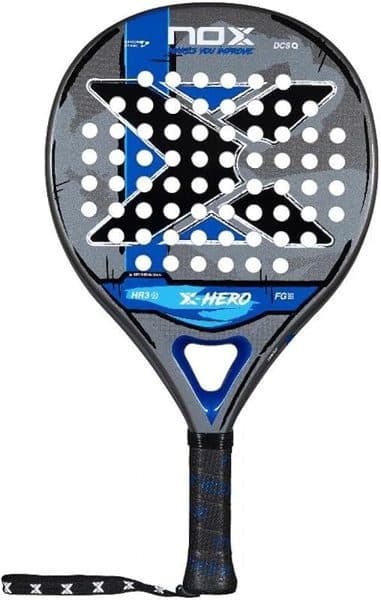
| NOX X-Hero | Round | 360–380g | Ex-tennis players | £60–£70 |
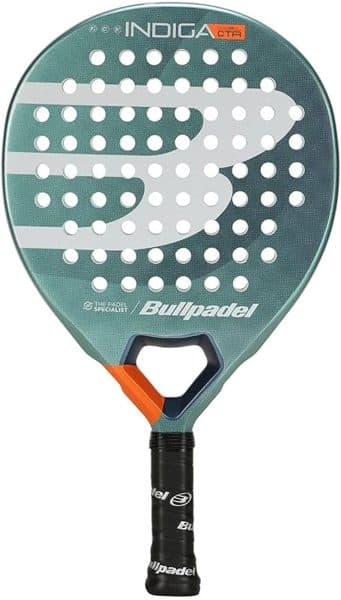
| Bullpadel Indiga CTR | Round | ~370g | Brand fans | £65–£75 |
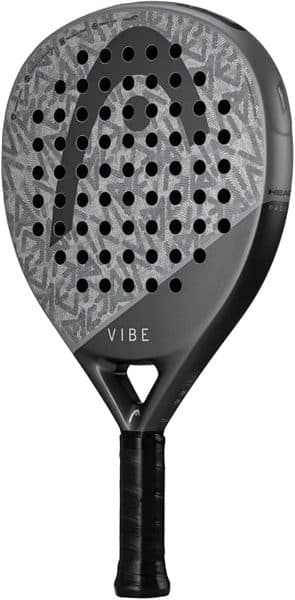
| HEAD Vibe | Oversized teardrop | 350g | Easy power | £60–£70 |
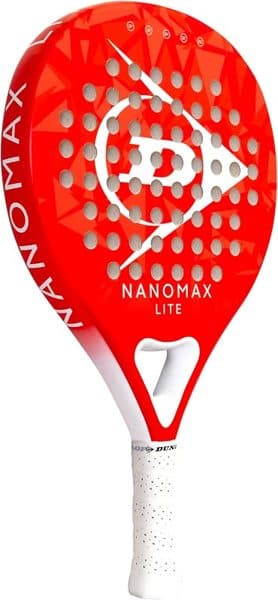
| Dunlop Nanomax (350g) | Hybrid | 350g | Comfort | £50–£55 |
The 10 best beginner padel rackets
Best overall
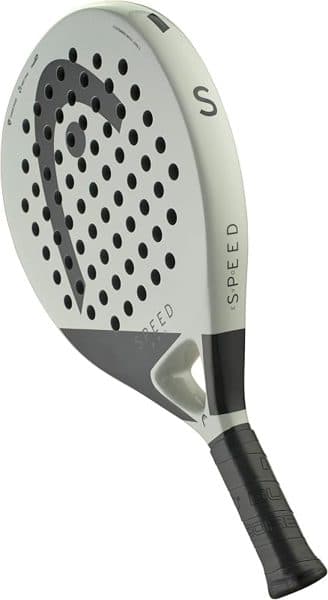
1. HEAD Evo Speed (2025)
- Oversized teardrop
- ~350g
- Fibreglass face
- Soft foam
- Lower balance
HEAD's Evo range is the default beginner racket in a lot of UK clubs, and the Speed is the pick of it. It has a big face, a soft fibreglass surface and low balance, so it's quick at the net and forgiving when you catch the ball off-centre after a wall rebound.
The teardrop shape adds a bit of free power without the tiny sweet spot of a diamond. HEAD also adds Innegra fibre to the frame to cut vibration, which your forearm will thank you for in week three.
- Buy it if
- You want one racket that's easy from day one and still fine at 2.5 level.
- Skip it if
- You're a strong ex-tennis player who wants a firmer, heavier feel.
Best for control
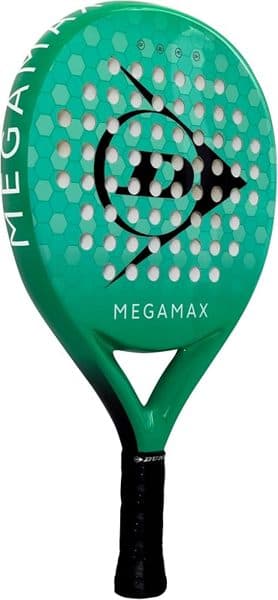
2. Dunlop Megamax
- Round
- 360g
- Graphite frame
- Pro EVA core
- Medium balance
The Megamax is what beginner rackets used to be: round, predictable and honest. The sweet spot sits in the middle of the face where your early contact will actually be, and the graphite frame feels sturdier than the price suggests.
The EVA core is firmer than the HEAD or Wilson foams, so you get a bit more feedback. That's useful if you already play tennis or squash and want to feel where the ball is on the face.
- Buy it if
- You want the classic control racket and don't want to spend more than £55.
- Skip it if
- You want a softer, more cushioned feel. The Wilson Optix is gentler.
Softest round racket
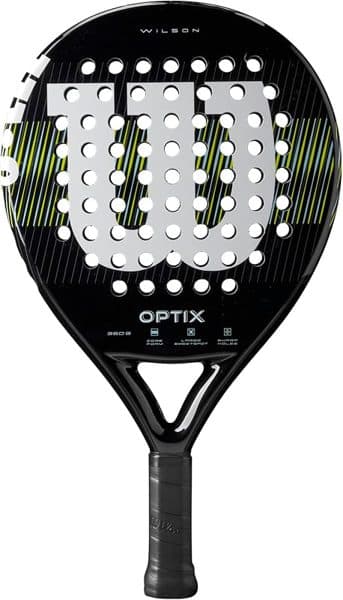
3. Wilson Optix V1
- Round
- 355g
- Fibreglass
- Low-density foam
Wilson built the Optix V1 for people in their first months of padel, and it shows. The large round head and low-density foam make it very forgiving, and the ball comes off softly, which helps you keep it in the court while you're learning the lob and the bandeja.
The trade-off is power. Big hitters will find it a little mushy on smashes. For a first racket that's usually the right trade.
- Buy it if
- You want maximum comfort and control and you're starting from scratch.
- Skip it if
- You hit hard already. It can feel a bit dead when you swing big.
Best budget
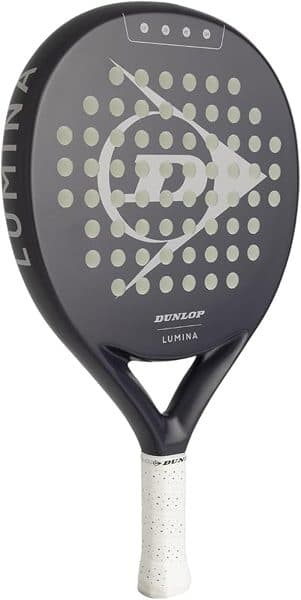
4. Dunlop Lumina (Amazon exclusive)
- Hybrid
- 365g
- Graphite frame
- Pro EVA core
- Medium balance
The Lumina is an Amazon-exclusive Dunlop, and it's the cheapest racket here that I'd happily use every week. The hybrid head sits between round and teardrop, the graphite frame is solid, and the 38mm profile is standard.
At 365g it's at the heavier end for a beginner. That weight gives stability on blocks and wall shots, but lighter players should pick the Megamax or Gravity Elite instead.
- Buy it if
- You want a proper branded racket for the price of a few court bookings.
- Skip it if
- You're under about 60kg or have wrist issues. 365g may feel heavy.
Best lightweight
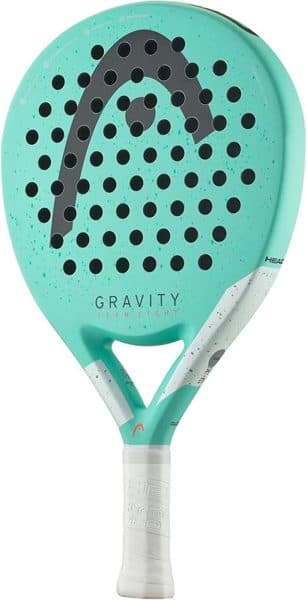
5. HEAD Gravity Elite
- Round
- 340g
- Control foam
- 270mm balance
At 340g this is the lightest of the round rackets here, and the lightest model in HEAD's Gravity series. A low 270mm balance means the head feels almost weightless at the net.
Light rackets can feel twitchy on hard-hit balls, but the round shape and control foam keep it steady. It's also one of my go-to suggestions for players over 50 or anyone who's had tennis elbow before. See the tennis elbow racket guide for more.
The Amazon listing covers the whole Gravity series (Pro, Motion, Elite), so make sure Elite is selected before you add it to your basket.
- Buy it if
- You're a smaller player, a junior moving up, or you're nursing an elbow.
- Skip it if
- You're tall and strong. You'll want more mass behind the ball.
Best if you'll play weekly
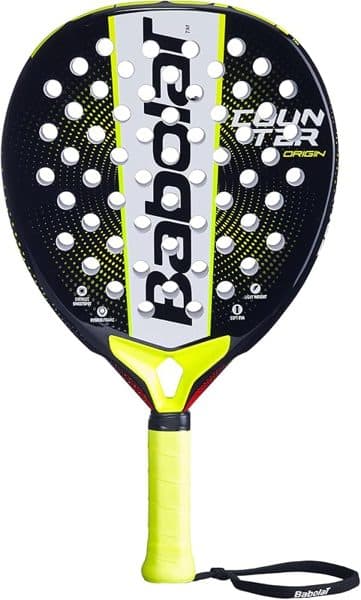
6. Babolat Counter Origin (2025)
- Oversized round
- 355g
- Carbon/glass frame
- Low balance
The Counter Origin is Babolat's entry control racket. The oversized round head is generous, and the mixed carbon and fibreglass frame feels a step up from the fibreglass-only rackets above.
It costs about £20 more than the HEAD or Wilson, and you're paying for build and longevity rather than easier play. If you're booking courts twice a week, that's money well spent.
- Buy it if
- You already know padel's your thing and want one racket for your first year.
- Skip it if
- You're still deciding whether you like the sport. Hire first.
Best for ex-tennis players
7. NOX X-Hero (2026)
- Round
- 360–380g
- Carbon frame
- 3K fibreglass face
- HR3 EVA
NOX is one of the biggest names in Spanish padel. The X-Hero is its round control racket for beginners and improvers, with a carbon frame, a fibreglass face and a soft white EVA core.
It's heavier than most on this list, which suits players who already have a swing. That mass helps you punch volleys deep without muscling them.
- Buy it if
- You've played tennis or squash and want a solid, stable racket.
- Skip it if
- You're new to racket sports. Something lighter will be easier.
Best from Bullpadel
8. Bullpadel Indiga CTR 25
- Round (control)
- ~370g
- Carbon frame
- Fibreglass face
Bullpadel is everywhere on the pro tour. The Indiga line is its entry range, and CTR means control, so it's round with the balance kept near the handle.
It's a sturdy racket that will last well beyond your beginner phase. It's heavier than the HEAD and Wilson options, so best for adults who are reasonably strong through the shoulder.
- Buy it if
- You want Bullpadel's pro-tour look and feel in a beginner-friendly shape.
- Skip it if
- Weight is your priority. There are lighter options above.
Best for easy power
9. HEAD Vibe (2025)
- Oversized teardrop
- 350g
- Fibreglass face
The Vibe sits alongside the Evo range as HEAD's casual all-rounder: oversized, teardrop, soft fibreglass face, 350g. It gives a bit more pop than the Evo Speed and is very easy to swing.
It's a good choice if you mainly play social Americanos and like to attack, but you're not after a proper power racket yet.
- Buy it if
- You're a casual social player who wants the ball to fly without much effort.
- Skip it if
- You want pinpoint control. A round racket will be steadier.
Best for comfort
10. Dunlop Nanomax (350g)
- Hybrid
- 350g
- Graphite frame
- Soft EVA
- Textured face
This is the lighter, soft-EVA version of the Nanomax. There's also a 365g Pro EVA version, so check the listing before you buy. The hybrid head gives a wide sweet spot and the textured face helps with spin once you start slicing.
It's a sensible middle ground between the Megamax's control and the Evo Speed's comfort.
- Buy it if
- You want something light and cushioned that still feels solid.
- Skip it if
- You want a pure round control shape. Pick the Megamax.
How we picked
Every racket here is from an established padel brand, currently sold on Amazon UK, and fits the profile most coaches suggest for new players: roughly 340–370g, round or oversized teardrop, soft to medium foam, and low to medium balance. We checked each one's specs against the listing and the manufacturer. We left out pro signature models and diamond shapes, and anything from a brand you've never heard of with suspiciously perfect reviews.
Hire before you buy
Most clubs stock hire rackets for £3–8 per session. Three sessions on venue kit before spending £60 is sensible.
Filter courts with racket hire near you. If you've already got the right shoes, hiring lets you test padel before the kit bill adds up. Or, if two of you are starting together, a twin racket set can be better value.
Weight matters most
340–355g: Very manoeuvrable. Smaller players, wrist issues, pure beginners.
355–370g: Where most UK beginners should start. Balanced feel.
370–385g: Stable on wall shots. Stronger players, ex-tennis, anyone who wants less vibration.
385g+: Usually too much for month one.
Too heavy and your elbow complains by game three. Too light and centre-court blocks feel shaky.
Shape
Round (control): Sweet spot in the middle, forgiving mishits. Best first buy.
Teardrop (power): Weight higher up, more punch. The oversized, soft-faced teardrops above are fine for beginners. Stiff, compact teardrops are not.
Diamond (power): Small sweet spot. Skip for now.
Beginners chasing power buy a diamond, mishit off the glass, and blame the sport. A round shape fixes half of that.
Balance and foam
Low balance: Head feels lighter, easier to volley and recover at the net. What most beginners want.
High balance: More power, more work on defensive walls. Wait on this.
EVA foam is standard. Softer EVA gives comfort and shock absorption. Harder EVA gives more feedback and, later, more power. If you've got tennis elbow history or you're playing twice a week straight away, look for soft or medium EVA and a fibreglass face.
Grip and price
Most adult rackets ship with one grip size. Overgrip tape (£5) thickens it cheaply; see our padel accessories guide. The grip should feel secure without straining your forearm.
Under £45: Unbranded rackets. Fine for a garden knockabout, not for weekly play.
£45–£85: The sweet spot for a first proper racket. Everything above sits here.
£100–£200: Improver territory. Wait until you're stable at 2.5+.
£200+: Not for session one.
Sales tend to land in January and around Black Friday, and last season's colourway is often £10–£20 cheaper for the same racket.
What not to buy
Tennis rackets: wrong sport, wrong rebound.
Pro player signature models: built for power you don't have yet.
The heaviest diamond in the shop because the guy on YouTube uses it.
When to upgrade
Play twice a week for three months. Your Playtomic level is stable at 2.5+. You know whether you prefer the net or the baseline. Your racket feels too soft, or you want more from your smash.
When that happens, our intermediate racket guide picks up where this one ends. Until then, a £60 round racket beats a £220 diamond.
Round or oversized, 340–365g, low balance, £45–£85. Hire first. Upgrade when your technique asks for it, not the marketing.
Find courts, borrow or hire, and hit walls for an hour. You'll know within three sessions whether the weight feels right.