Padel vs Squash: What's Actually Different?
17 June 2026 Jamie Holt
Squash clubs are quiet. Padel courts are full. If you've played squash for years and you're wondering what the fuss is about: they're both enclosed racket sports, but they feel nothing alike once you're on court.
Size and walls
Squash is a tight box. You're close to your opponent, the walls, the ball: fast reactions, short swings, claustrophobic in the best way.
Padel is roughly double the footprint, usually with four players. The glass walls are in play, but the ball has to bounce on the ground before hitting glass on your side (serve aside). Squash players often find padel spacious at first, then realise the extra room is filled by a partner, two opponents, and lobs that hang in the air for an uncomfortable length of time.
Full padel court dimensions here.
Equipment
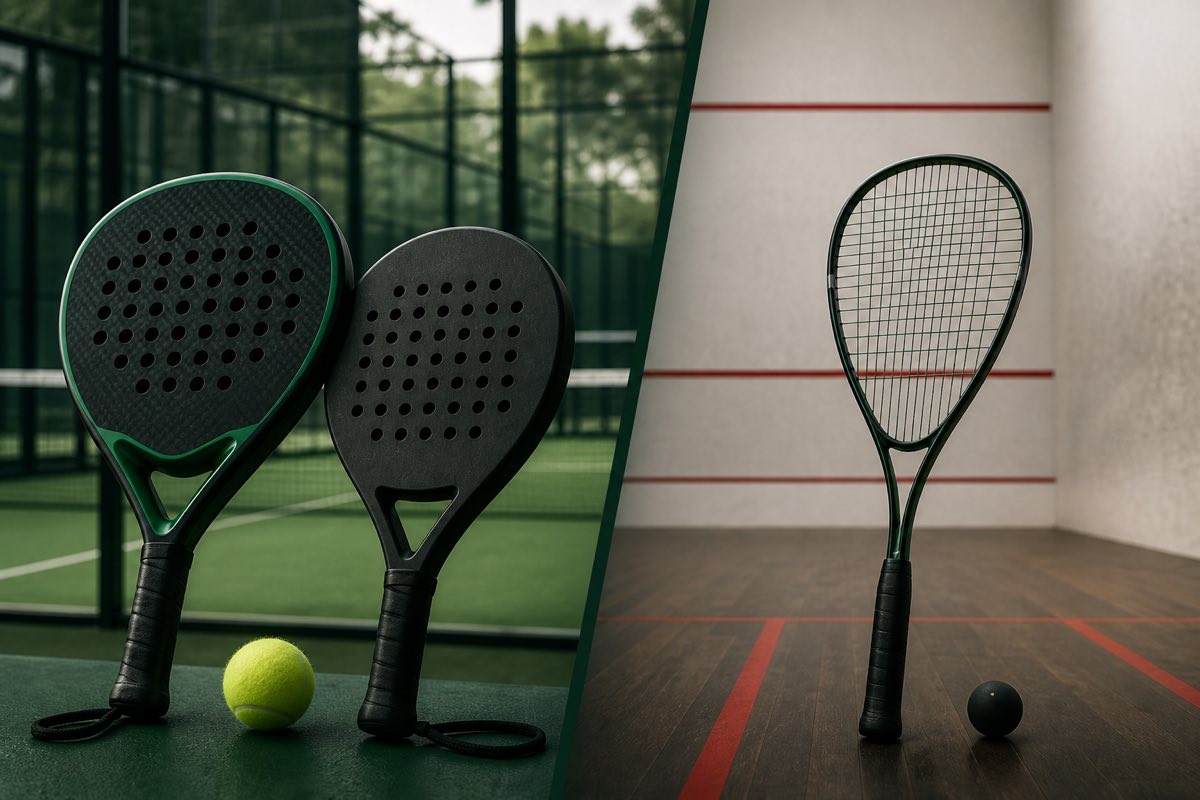
Squash rackets are small, light, strung. Power comes from wrist and forearm. Padel rackets are solid with holes, heavier, bigger sweet spot. Power comes from body rotation and placement.
Squash balls come in dot colours for different bounce levels. Padel balls look like tennis balls with less pressure. They move slower, which is partly why padel feels easier than tennis for complete beginners.
Squash players over-hit in padel for the first few sessions. The wrist snap that works in a squash box just sends the ball long.
Scoring and serve
Squash uses point-a-rally to 11 (or 15). Every rally wins a point. Serve goes to whoever won the last point.
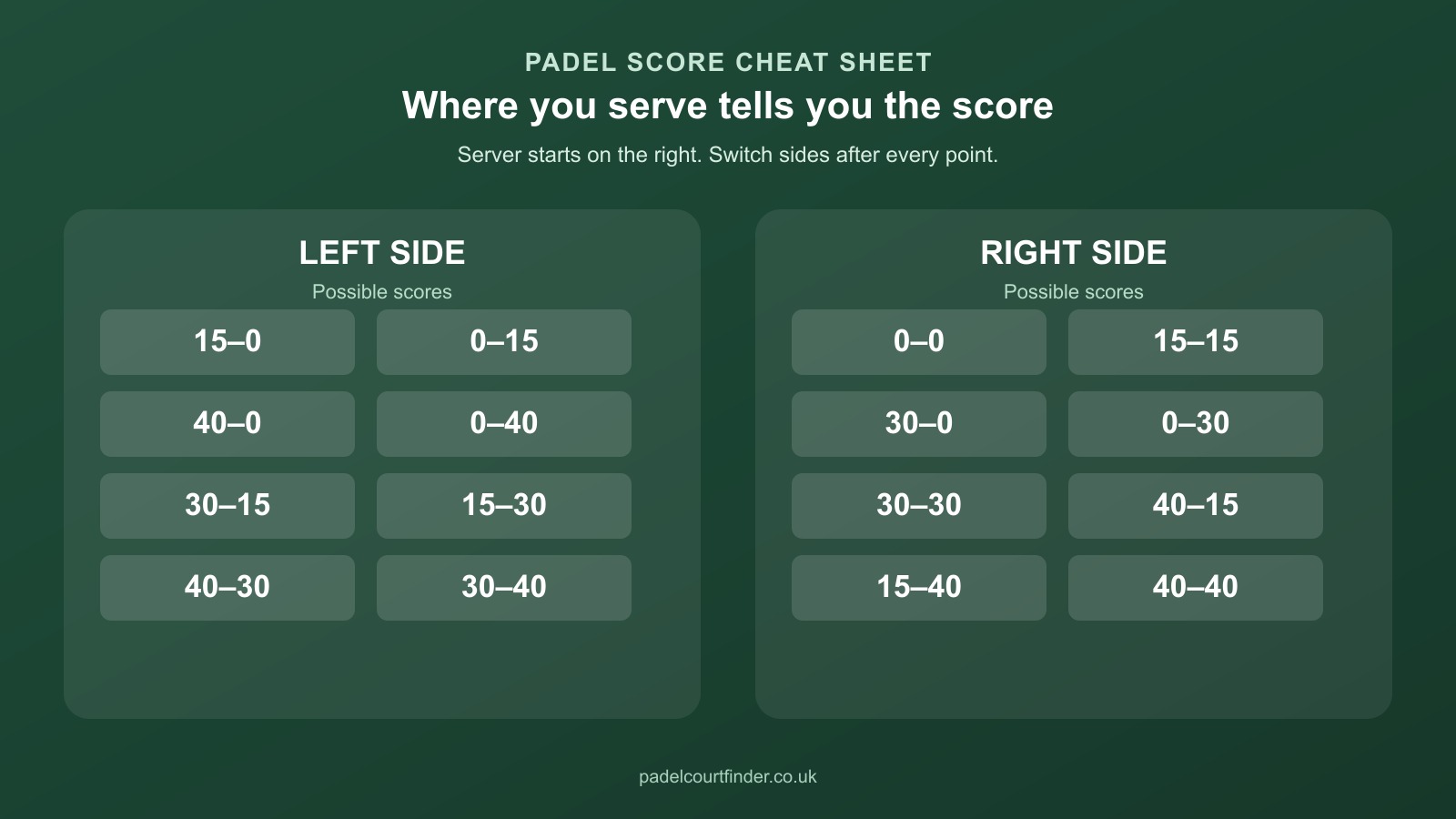
Padel uses tennis scoring: 15, 30, 40, game, sets to six. Full breakdown here. The serve is underarm with a bounce first, diagonal into the box. Squash players find it almost comically easy at first. The rest of the game compensates.
Fitness and vibe
Squash is a brutal solo workout in a small space. Singles squash will destroy your legs.
Padel in doubles is still a workout but there's more positioning, less non-stop sprinting. Four people sharing the court means less ground per person. If you want maximum cardio in minimum space, squash wins. If you want something social that still gets your heart rate up, padel wins.
Squash players pick it up fast
Wall awareness transfers directly. So does court positioning, touch, and rally patience. What takes adjustment: communicating with a partner, trusting the bounce before the glass (squash instinct says hit early), and the lob as a genuine weapon rather than a desperation shot.
Most squash players are functional within two or three sessions. Doubles positioning takes longer.
Which one for you?
Squash if you want solo fitness and your local club has courts. Padel if you want doubles, something easier to drag friends into, or you're starting later and prefer less joint stress. Our over-40 beginner guide covers that angle.
Plenty of clubs now offer both. Tennis and squash facilities across the UK are adding padel courts outdoors. If yours hasn't yet, there's probably a venue nearby on Padel Court Finder.
Also worth reading: padel vs pickleball if you're comparing more broadly.
Written by

Padel expert & guide writer · Manchester
Jamie picked up padel when the first courts opened around Manchester and never looked back. A former club tennis player, he now plays three or four times a week and writes practical, UK-focused guides for Padel Court Finder — covering rules, gear, booking tips, and the local scene.